
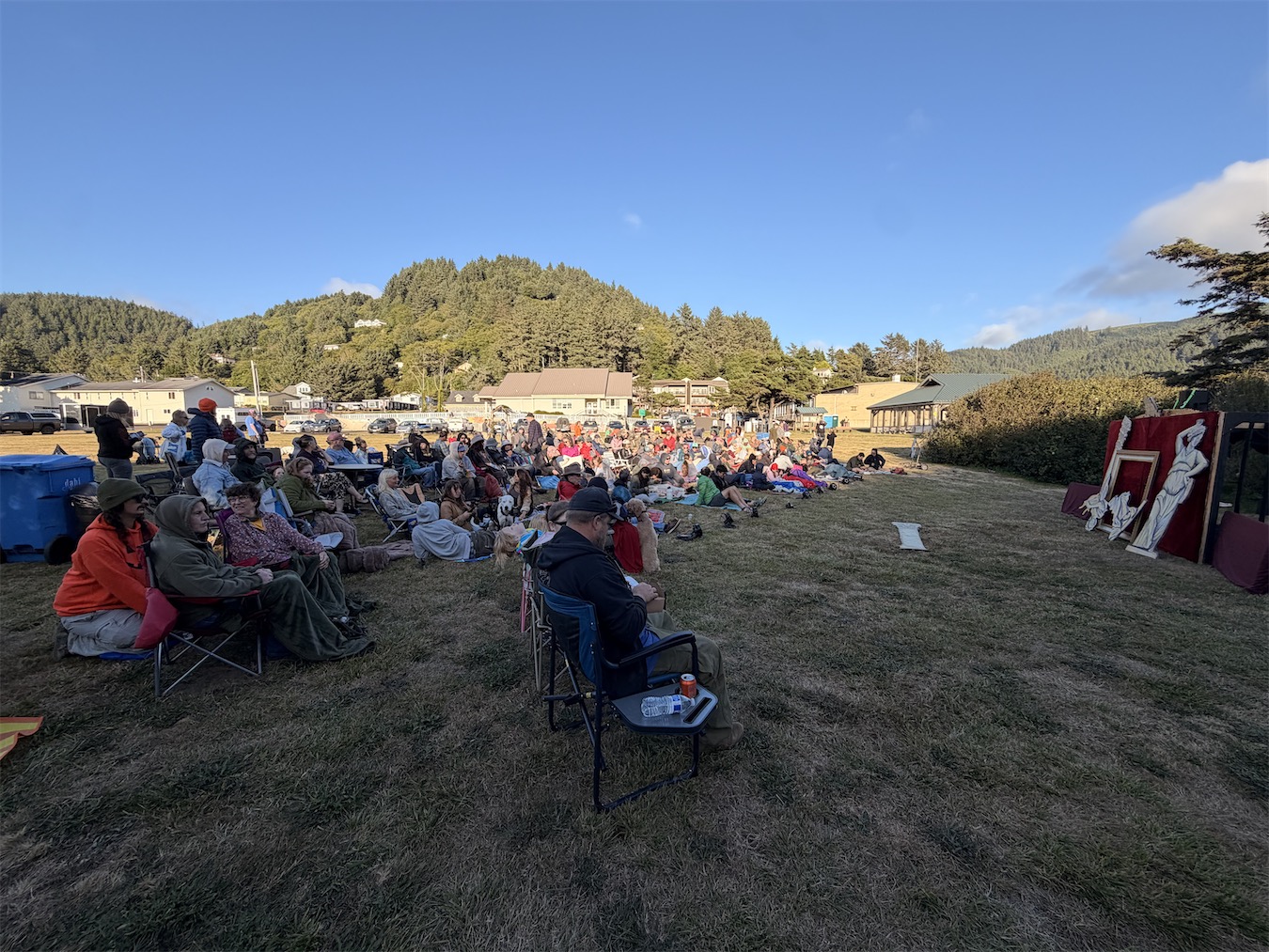
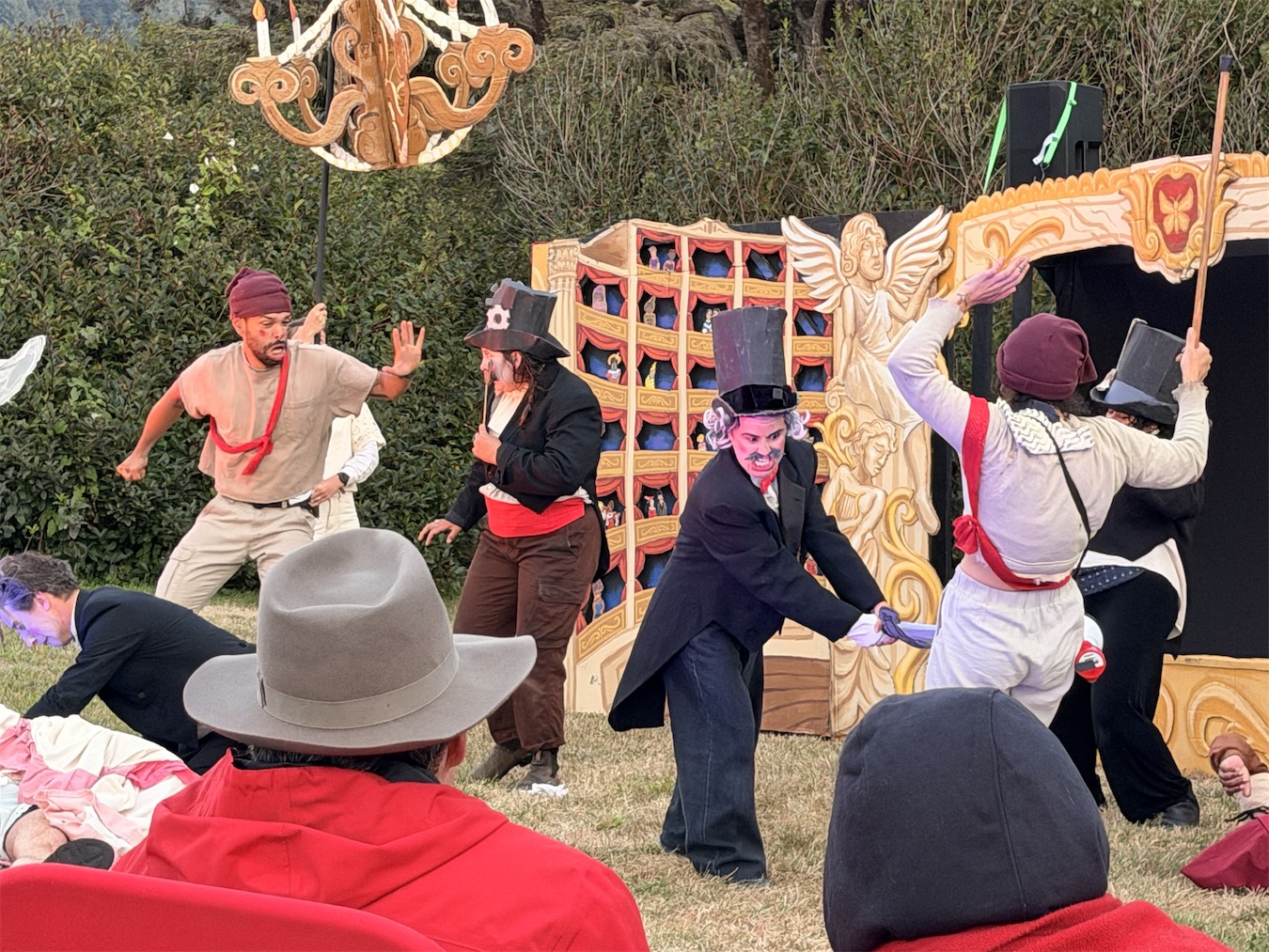
On the evening of August 9, a field in Yachats turned into an opera house. String and Shadow Puppet Theater, a company out of Olympia, Washington, rolled into town with their touring show, Night at the Grand Opera, and built a whole opera house right there in the grass. We spread out a blanket, found our neighbors, and settled in as the light went gold over the hills. A good part of the Emerald Curtain Collective was there, and if you were sitting anywhere near us, you know it. We are not quiet people. Audience participation is a love language, and we spoke it at volume.
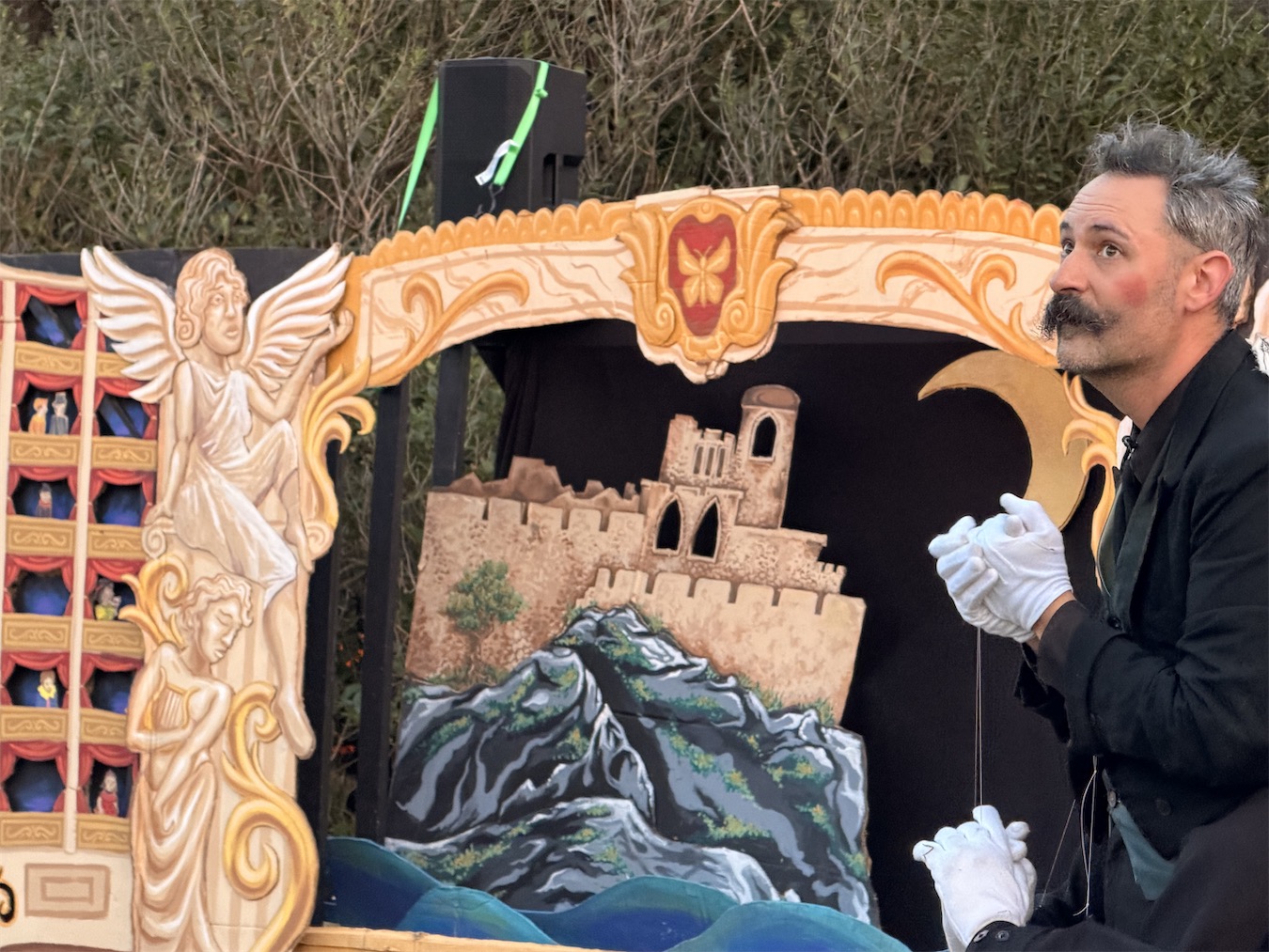
The whole show is narrated by a fly. Signore Muscavitch, an art-loving fly who lives on the wall of the opera house, played by Anthony Szabo, who was so good it is genuinely hard to describe. Here is the bit that undid us. Every single time the fly landed somewhere new, a pillar, a railing, the top of the arch, he settled in with a small vocal bzzzt, rubbed his hands together, cleaned them off, and carried on. And he did it mid-sentence. He could be halfway through a line, shift to a new perch, drop a seamless little bzzzt into the middle of the thought, and keep right on going without a hitch. It never once stopped being funny. By the end we were all watching for it.
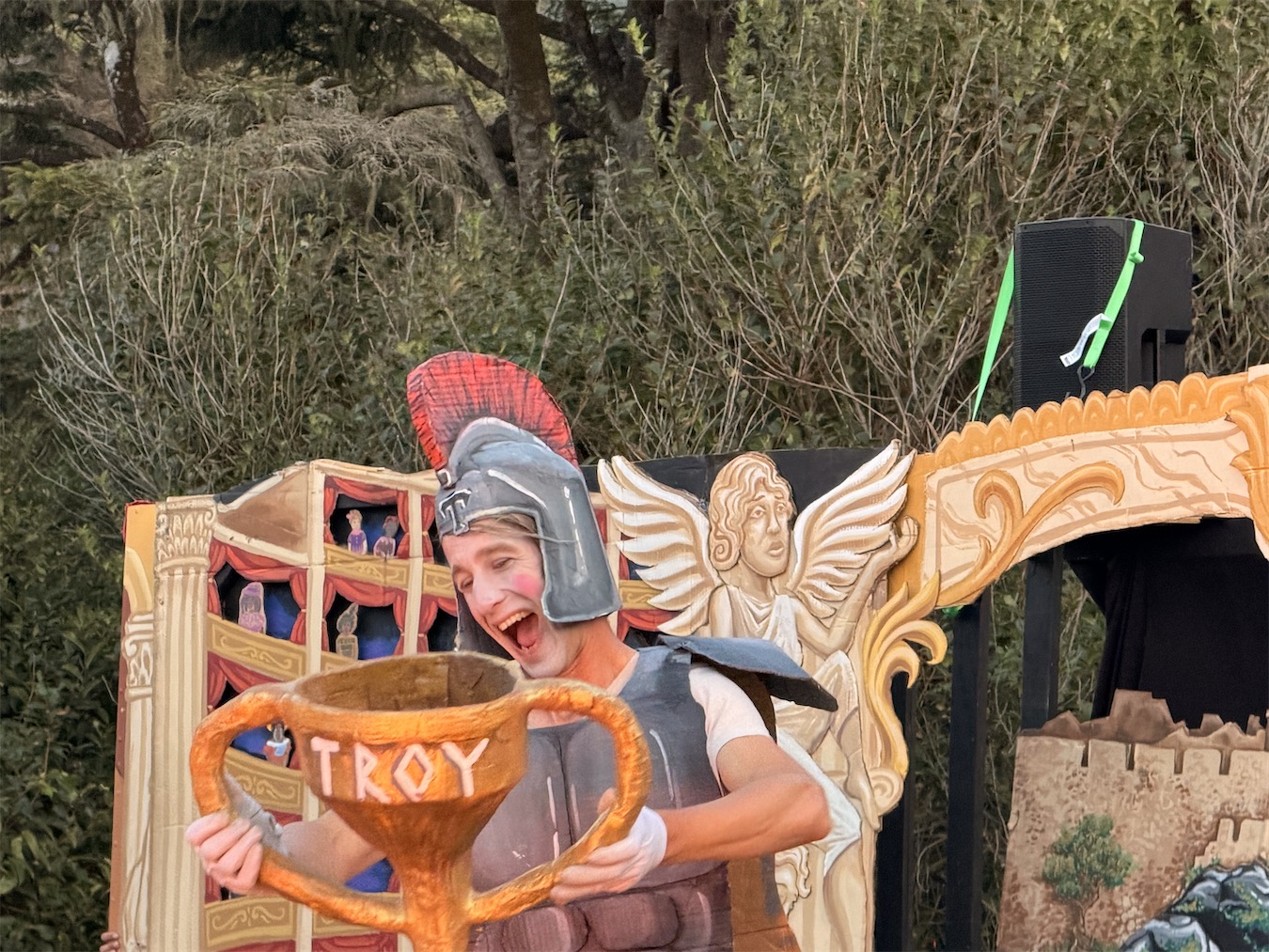
The fly was only the beginning. The whole thing was wall-to-wall comedy, sight gags and groan-worthy puns and a golden trophy the size of a toddler that read TROY. It is a show that trusts you to laugh and think at the same time, and it never once talked down to the kids in the crowd, of whom there were many.
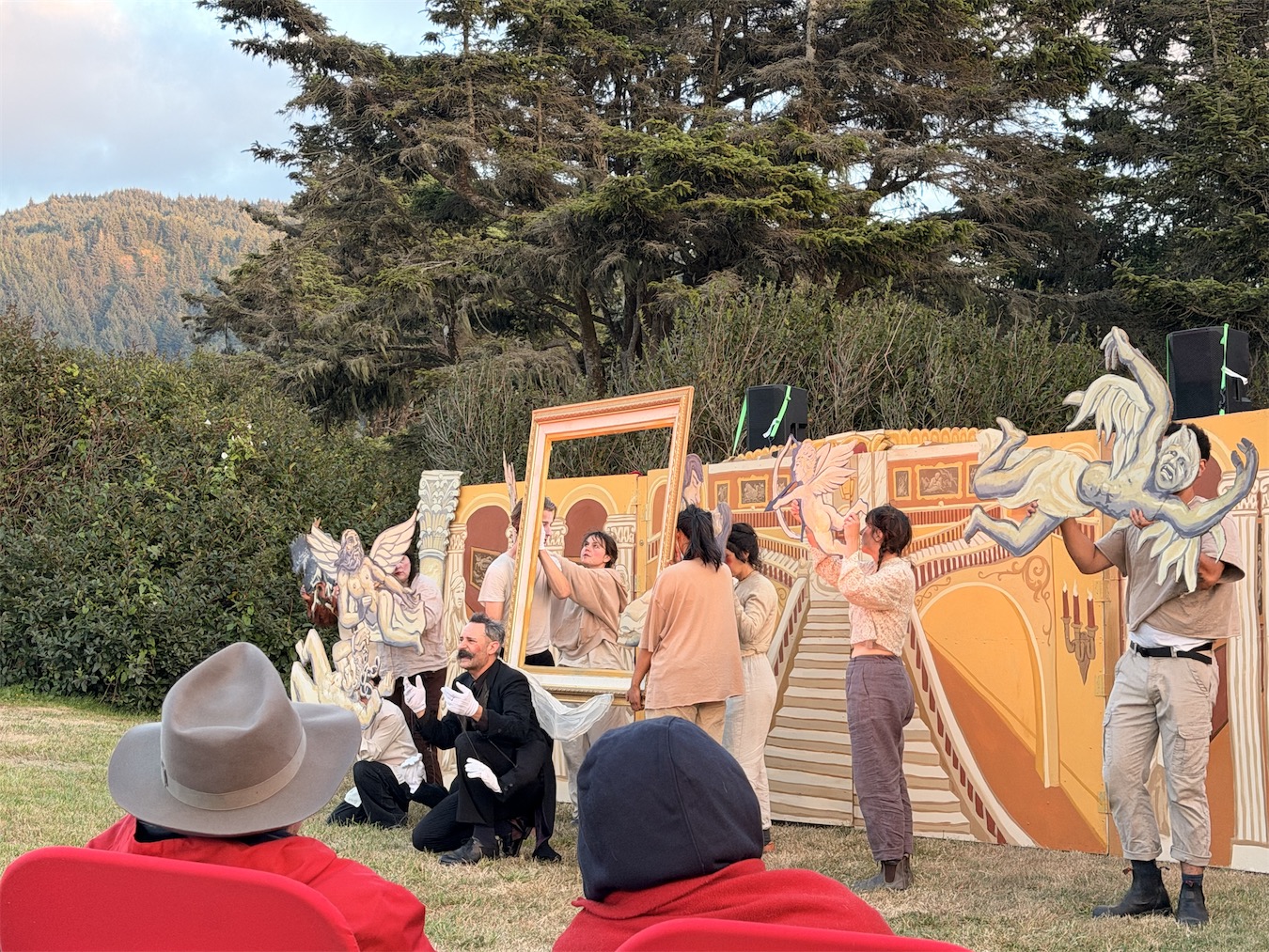
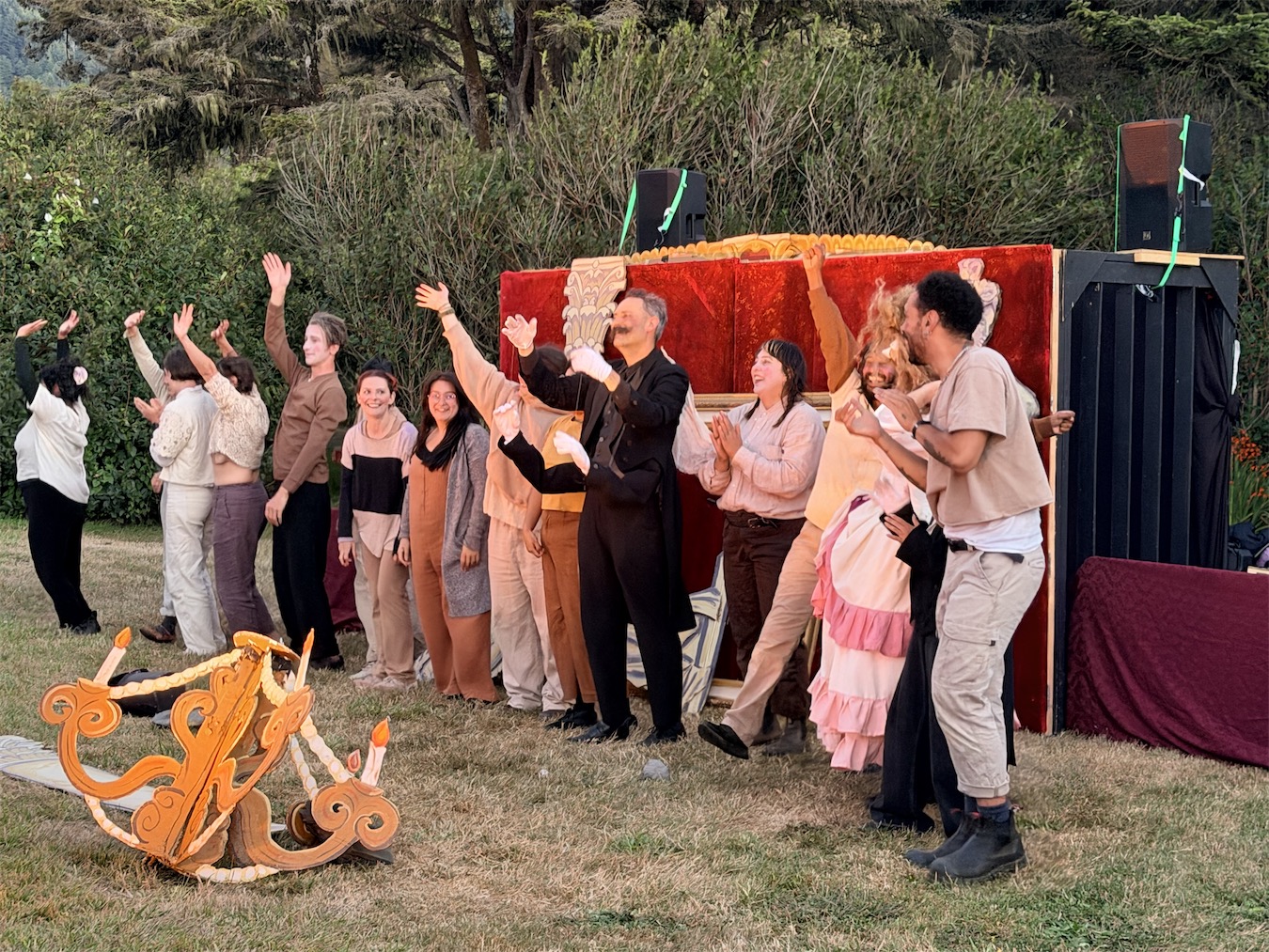
And then there was the craft, which the makers among us could not get over. Every bit of it was built by hand, and there was so much of it. A grand painted staircase. Frescoes running along the upper molding. Puppets and costumes and props past counting. The stage itself moved, unfolding and folding back to carry us from backstage to the house and out again, so the fly could circle the opera hall and light on a pillar to narrate the drama playing out below. The part that stuck with us: this entire world packs down into a truck and gets rebuilt, town by town, night after night, across four states, by thirteen puppeteers doing it all by hand.
One subplot landed a little close to home. The baron of the piece wants to bring in a mechanical piano, a machine that would play the music so the house could do without its pianist, and he does not hide that the musician is only the first job on the list. The machine breaks down, thankfully, and the show carries on the way it was built to, on real human hands. There is a murder plot too, which we will not spoil. Watching a puppet baron try to automate the artist out of existence, in the year 2026, it did not take much squinting to see what the story was really about. It is a fight over the soul of the thing, over whether art is made by people or ordered by the unit, and it is being had right now, well outside the opera house.
Night at the Grand Opera is set in the Gilded Age, that stretch of history when dazzling wealth piled up in a very few hands while everyone else scraped by on what was left. The show is not subtle about the parallel, and it has no interest in being. This is a story about who art is really for, and about what a handful of very rich men will do to keep the party going and the rest of us out of the room. Watching it in the summer of 2026, it did not play like a period piece. It played like the news. Which is exactly the thing we keep circling back to at ECC: art is not separate from activism, it is activism. A hand-built opera house in a field can say the quiet part out loud in a way no press release ever will.
We left inspired, and a little competitive, in the best possible way. A few of us have been itching to build another ECC puppet show for a while, and this lit the fuse. So here is a small piece of news to carry out of the evening: this Winter we are sitting down to start the script for a show of our own, about the soil, the living ground beneath our coastal forests, and how much of everything above it depends on what is happening down there. It is early days. We are not going to spoil it. But it is real, and we will let you in as it takes shape.
If String and Shadow rolls anywhere near you, go. Every show they put on is free or by donation, because they hold that access to art is a right, and that is worth showing up for. You can find them at stringandshadow.com. Bring a blanket, bring your neighbors, and do not be afraid to be loud.
Watch
A few clips from the evening, shaky camp-chair camerawork and all.