On Wednesday, July 22, the Oregon Board of Forestry voted to approve a new management plan for our western state forests. The vote was five to two. If you wrote to the board this spring, or signed on to one of the actions we shared, this one is yours too.
Here is what the vote means in plain terms. The new plan, paired with the companion habitat conservation plan the state adopted in 2024, will keep logging off of roughly half of western Oregon’s state forests, about 640,000 acres spread across the coast range and northwest of here. It reserves about forty percent of the rest to give the northern spotted owl room to move and to let older stands keep storing carbon. It covers seventeen threatened and endangered species. And it brings the overall amount of clearcutting down over the decades ahead. After generations of these forests being managed first for timber volume, the state has chosen to manage them for the whole living system: the water, the wildlife, the air, and the trees themselves.
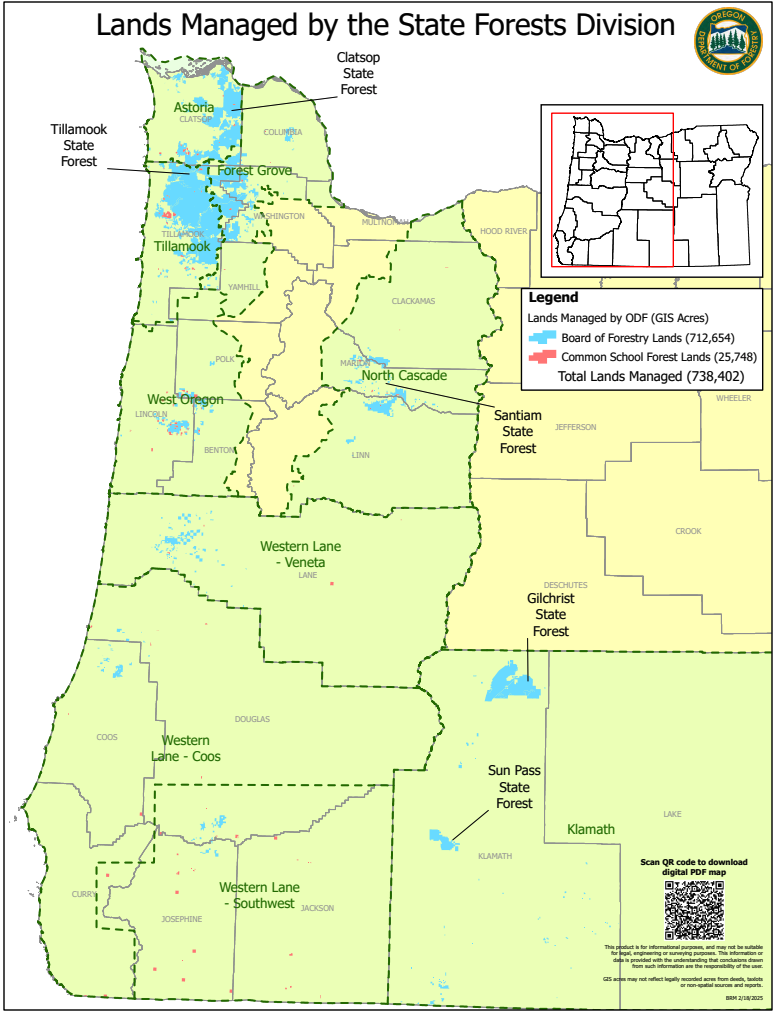
That matters more here than almost anywhere. The forests of the coast range hold more carbon per acre than most forests on earth, more than the Amazon. They are the headwaters of the streams that feed our bays. They are the green wall that gives the Emerald Curtain its name. A plan that protects them is a plan that protects Waldport, protects Alsea Bay, protects the salmon and the marbled murrelet and the drinking water and the quiet. These are all interconnected systems, which we are just really starting to understand, that aren’t aware of the arbitrary lines we have decided to draw across them. This is exactly the work we set out to do together: protect Oregon Coast ecosystems through art, education, and community action.
We want to be honest about our part in it, because the honesty is the point. This win was decades in the making, and the people who carried it the longest were not us. Groups like the Coast Range Association have been pushing for a real, science-based forest plan long before ECC existed. Eight years of formal struggle went into the vote this week, and much more before that. When we say this is a victory for our community, we mean the whole community: the biologists, the letter-writers, the coalition partners, and the neighbors who kept showing up.
Our piece was small and it was real. This spring, our Action Team sent ready-to-go emails to the Board of Forestry asking them to choose habitat, clean water, and climate over clearcutting. Many of you took ten minutes to add your name. Those messages landed in the same inbox the board was reading as it made this decision. That is how a young nonprofit on the coast helps move something this big: by adding steady, local voices to a chorus that has been singing for a long time.
Now the clear-eyed part. A vote is not a finished forest. The plan does not take effect until July 1, 2027, and the federal sign-off on the habitat conservation plan is still expected to come this winter. Two members of the board voted no, and the timber industry has signaled it will contest the plan at every step of the years of implementation still ahead. Good outcomes on the coast are rarely won once. They are won, and then defended, and then defended again. We plan to be there for the defending.
So today we are letting ourselves feel the good of it. A lifetime of work by people who love these woods, and a coast that will be a little wilder and a little safer for it. Thank you for being part of the chorus.
If you would like to stay in it, you can find the current set of actions on our Act Now page, and you can join our newsletter and Action Team to hear when the next moment to speak up arrives. There will be a next one. There always is. And this week showed what happens when enough of us answer.
With gratitude, and a little celebration,
The Emerald Curtain Collective